Soft Robotics
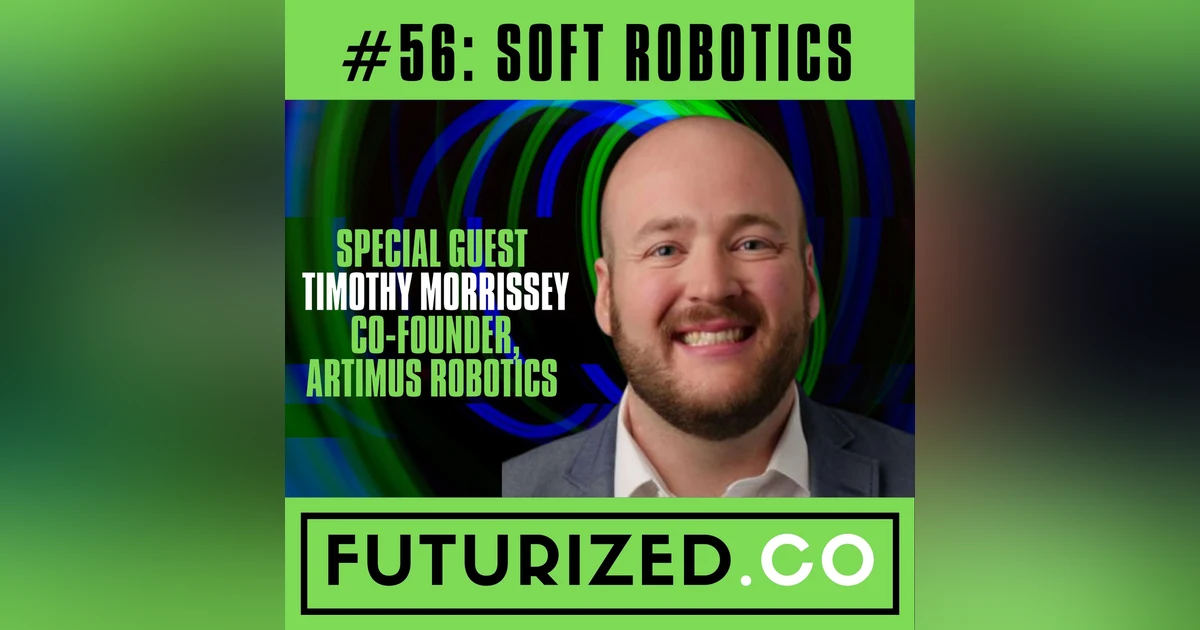
Timothy Morrissey, CEO and co-founder of Artimus Robotics interviewed by futurist Trond Arne Undheim.
In this conversation, we talk about why develop artificial muscles? Tim explains the differences between; actuators, motors, engines, machines, robots,...


 Apple Podcasts Apple Podcasts
  Spotify Spotify
  YouTube YouTube
  Amazon Music Amazon Music
  PocketCasts PocketCasts
  RSS Feed RSS Feed
  Podchaser Podchaser
  Podcast Addict Podcast Addict
  iHeartRadio iHeartRadio
  Overcast Overcast
  Castro Castro
  Castbox Castbox
  TuneIn TuneIn
  Deezer Deezer
  Pandora Pandora
  RadioPublic RadioPublic
 Timothy Morrissey, CEO and co-founder of Artimus Robotics interviewed by futurist Trond Arne Undheim.
In this conversation, we talk about why develop artificial muscles? Tim explains the differences between; actuators, motors, engines, machines, robots, automation, augmentation, and humans—what a mouthful. We discuss how robots are poised to take over the dull, dangerous and dirty jobs, but not really many other jobs—in the near future. A soft robot’s artificial muscles’ advantages includes speed, energy density, power and efficiency. We discuss key emerging applications in industry, medicine and other fields, from berry pickers to automobiles, robots in the home, adult toys and beyond—yes, artificial can be REALLY soft, too.
My takeaway is that soft robotics is what will make robots seem more human, which is nice and a bit scary, but that’s not really the point. The applications emerging are capable of non-human feats that will transform science, engineering, products, and—ultimately, our society. The immense progress envisioned is a ways out, what we are seeing now is really only scratching the surface. Prepare to be amazed a decade from now, and within the next thirty years, robots will be unrecognizable from what they are today. Some soft robots, nanobots, will also be so small that they will be invisible to the human eye. All exciting, exhilarating, and slightly perplexing. However, understanding soft robotics is not that hard—I’m going to make it recommended reading and exploration for my kids, at lest. Might as well prepare their for their adulthood, which will truly be he age of robotic coexistence. Science fiction come true, one might say.
After listening to the episode, check out Artimus Robotics as well as Timothy Morrissey's online presence:
- Artimus Robotics (@ArtimusRobotics) https://www.artimusrobotics.com/
- Timothy Morrissey https://www.linkedin.com/in/tgmorrissey/
The show is hosted by Podbean and can be found at Futurized.co. Additional context about the show, the topics, and our guests, including show notes and a full list of podcast players that syndicate the show can be found at https://trondundheim.com/podcast/. Music: Electricity by Ian Post from the album Magnetism.
For more about the host, including media coverage, books and more, see Trond Arne Undheim's personal website (https://trondundheim.com/) as well as the Yegii Insights blog (https://yegii.wpcomstaging.com/). Undheim has published two books this year, Pandemic Aftermath and Disruption Games. To advertise or become a guest on the show, contact the podcast host here. If you like the show, please subscribe and consider rating it five stars.


